
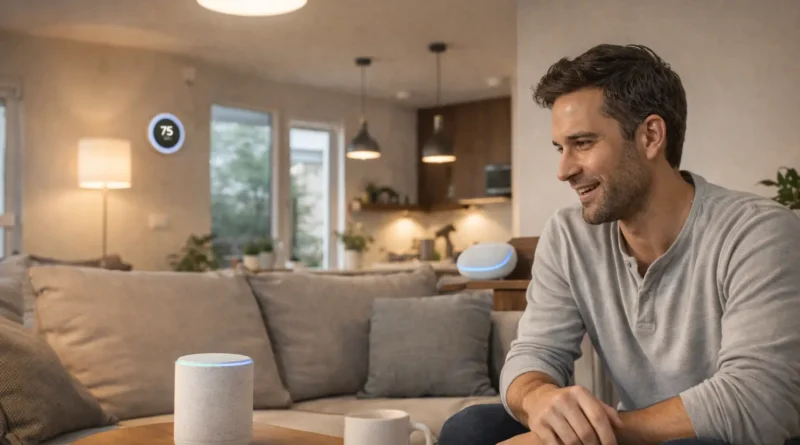
How AI-Powered Smart Home Devices Transformed My Daily Life
How AI-Powered Smart Home Devices Transformed My Daily Life
Artificial Intelligence is no longer just a futuristic concept—it is becoming a part of our daily routines, quietly improving convenience, comfort, and efficiency. Over the past year, I integrated AI-powered smart home devices into my apartment in Tunis, and the results were eye-opening. From saving energy to personalizing my living space, AI is changing the way I interact with my home. This guide shares my real-world experience, practical tips, and insights for anyone considering a DIY AI smart home setup.
1. Why Smart Homes Benefit from AI
AI-powered devices go beyond basic automation. Unlike traditional timers or remote controls, AI learns from your habits:
- Adjusts lighting based on your schedule and natural light.
- Optimizes heating and cooling depending on occupancy.
- Suggests energy-saving routines tailored to daily routines.
- Integrates seamlessly with entertainment systems and voice assistants.
Human Insight: In my apartment, my AI assistant learned that I usually work from 9 AM to 1 PM, and gradually dimmed lights in unused rooms while adjusting the thermostat to save energy. Within a month, I noticed a 20% reduction in electricity usage without any conscious effort.
2. Setting Up AI Smart Home Devices
Hardware Components
- Smart bulbs and switches: Wi-Fi enabled (Philips Hue, TP-Link Kasa)
- Smart thermostat: Nest or ecobee
- AI voice assistant: Raspberry Pi with Mycroft AI or commercial devices like Alexa
- Smart plugs: For appliances and entertainment systems
- Sensors: Motion, temperature, and humidity
Tools Needed
- Smartphone or tablet for setup
- Screwdrivers and mounting accessories
- Notebook to track wiring and device placement
3. Software and AI Platforms
- Home Assistant: Central hub for integrating all smart devices
- Mycroft AI or Rhasspy: Voice-controlled assistant for custom automation
- Python scripting (optional): For advanced routines and AI learning
Step-by-step, I connected devices to Home Assistant, then integrated my voice assistant. Testing took about a day, but once everything was connected, the AI immediately started learning my habits.
4. Personal Experience: Real-World Applications
- Morning Routine: Lights gradually turn on, thermostat adjusts to preferred temperature, and AI assistant reads my calendar and weather.
- Energy Efficiency: Smart plugs turn off devices when rooms are unoccupied.
- Entertainment: AI recommends music based on my past listening habits and adjusts lighting to match moods.
- Safety: Motion sensors trigger lights and notifications if unusual activity is detected while I’m away.
Human Insight: One evening, I forgot to turn off my living room lights. The AI noticed the lack of movement and automatically turned them off, saving energy and giving peace of mind.
5. Challenges and Troubleshooting
- Connectivity Issues: Some Wi-Fi smart plugs initially lost connection, resolved by assigning them static IPs.
- Learning Curve: Teaching the AI specific preferences took patience, especially with multi-device routines.
- Privacy Concerns: I configured local processing for my voice assistant, ensuring personal data never leaves my home network.
6. Future Possibilities
- Integration with predictive AI for energy consumption
- Multi-room synchronization with entertainment and climate systems
- Personalized AI routines based on seasonal changes or guests
7. Key Takeaways
- AI in smart homes can reduce energy usage, improve comfort, and automate tedious daily tasks.
- Human oversight is still important to fine-tune routines and ensure security.
- DIY AI smart homes are accessible, even for non-technical users, with step-by-step planning and testing.
Conclusion: Living with AI-powered smart home devices has transformed my daily life in a tangible, practical way. By combining automation, learning algorithms, and personalization, my apartment became more energy-efficient, comfortable, and responsive to my lifestyle. For anyone curious about AI, building a smart home is a rewarding, hands-on way to experience the technology firsthand.