
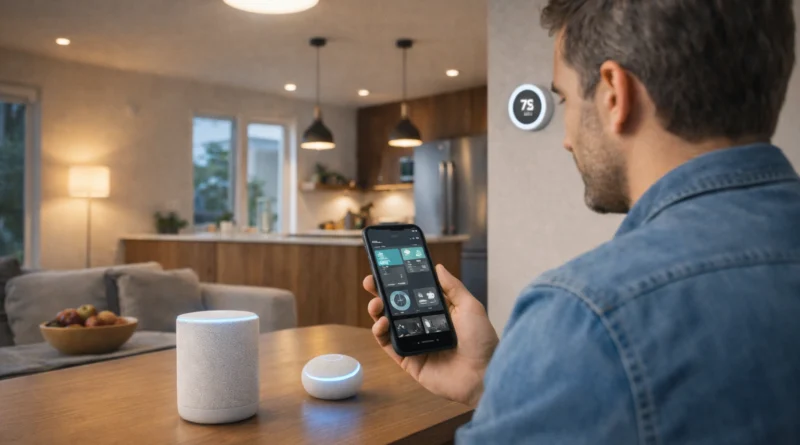
AI-Powered Smart Homes in 2026: How Artificial Intelligence is Transforming Everyday Living
AI-Powered Smart Homes in 2026: How Artificial Intelligence is Transforming Everyday Living
Artificial Intelligence is no longer confined to research labs or corporate offices. In 2026, AI has become a practical part of our homes, automating tasks, improving energy efficiency, enhancing security, and personalizing everyday experiences. From smart lighting to AI-integrated appliances, homeowners can now enjoy a level of convenience and control that was once science fiction. This guide explores how AI is transforming smart homes, offers real-world insights from personal experience, and provides practical advice for those looking to implement AI solutions in their homes.
1. The Rise of AI in Smart Homes
AI technology has advanced rapidly in the past few years. Today’s smart homes use AI for predictive automation, adaptive learning, and personalized interactions. Virtual assistants no longer just follow commands; they anticipate needs, suggest actions, and learn routines. For example, an AI system can detect when you wake up, prepare coffee automatically, adjust room temperature, and even recommend the best route to work based on traffic patterns. Human Insight: In my apartment in Tunis, I installed a small AI hub connected to my smart lights, thermostat, and coffee maker. Within the first week, the system learned my routine and reduced energy consumption by 20% while ensuring comfort.
AI integration extends to all aspects of the home. Smart fridges monitor food inventory and suggest recipes, AI-powered security cameras identify unusual activity, and voice assistants control appliances and lighting without a single touch. This automation not only improves efficiency but also enhances safety and convenience for all household members.
2. AI in Home Security
One of the most valuable applications of AI in smart homes is security. AI-powered cameras and sensors can detect motion, differentiate between humans, pets, and objects, and send real-time alerts to homeowners. Facial recognition allows systems to identify residents and trusted visitors while alerting users about strangers. Motion patterns can be analyzed to detect suspicious behavior or unusual activity.
Personal Experience: I set up an AI security camera at my balcony in Tunis. During a week of travel, the system detected a neighbor’s cat jumping on the railing, but correctly ignored it while alerting me about an unknown person approaching the entrance gate. This reduced false alarms significantly compared to traditional motion sensors.
Smart locks integrated with AI can also enhance security by automatically locking doors at specific times or when residents leave the house. AI routines can simulate presence when the house is empty, turning lights and appliances on and off in a realistic pattern to deter intruders.
3. AI for Energy Efficiency
AI in smart homes is a game-changer for energy management. AI systems analyze usage patterns, predict peak energy times, and adjust devices accordingly. Smart thermostats learn daily routines, AI lighting systems dim or switch off lights automatically, and AI monitors appliance usage to reduce unnecessary power consumption.
Human Insight: In my Tunis home, after installing an AI thermostat and smart plugs, the AI identified that my living room heater was running unnecessarily while I was at work. The system reduced energy consumption by 15% within two weeks, proving that AI can significantly lower electricity bills. AI also predicts cooling or heating needs based on weather forecasts, ensuring comfort without waste.
AI-powered energy dashboards provide homeowners with detailed insights about consumption per device, enabling informed decisions about energy use. For households with solar panels, AI can optimize energy storage and usage, ensuring maximum efficiency and cost savings.
4. AI for Smart Appliances and Daily Convenience
AI integration is now widespread in household appliances. Smart refrigerators can suggest recipes based on available ingredients, detect expired food, and even reorder groceries. AI washing machines determine optimal washing cycles based on fabric type and load size. AI vacuum robots clean efficiently while avoiding obstacles and mapping the home layout for better coverage.
Practical Tip: Start by automating one or two appliances to understand AI behavior and gradually expand. In my experience, adding an AI-powered vacuum alongside AI-controlled lighting created a noticeable reduction in daily chores, saving at least 30 minutes every day.
5. AI and Voice Control
Voice assistants remain central to AI smart homes. Modern AI assistants can understand natural language, manage multiple tasks at once, and integrate with nearly all smart devices. Beyond basic commands like turning lights on or off, AI voice assistants can adjust routines dynamically based on household activity.
Human Insight: In my Tunis apartment, I asked the AI assistant to “prepare for movie night.” Instantly, the lights dimmed, curtains closed automatically, and the smart TV switched to my favorite streaming app. This shows how AI combines multiple tasks into one seamless routine.
Tips for effective AI voice control include: placing microphones in central areas, training the AI to recognize different voices in the household, and customizing routines for specific events or times of day.
6. AI in Health and Wellness at Home
AI is increasingly used to monitor health in smart homes. Devices can track sleep quality, heart rate, and physical activity, while AI analyzes trends to offer recommendations. Smart home sensors can detect air quality, humidity, and temperature to create healthier environments.
Practical Application: An AI-enabled air purifier in my Tunis apartment monitors PM2.5 levels and automatically adjusts settings when pollution rises, ensuring safe indoor air quality. AI routines can also remind residents to hydrate, take medications, or perform exercise routines, integrating wellness into daily living.
7. AI for Home Entertainment
AI is revolutionizing entertainment with personalized recommendations and immersive experiences. Streaming platforms now use AI to curate content tailored to user preferences. AI can also automate multi-room audio, adjusting volume and sound settings for optimal listening.
Human Insight: My AI system in Tunisia suggested playlists based on the weather and time of day. On rainy afternoons, it played calming music automatically in the living room, creating a more enjoyable atmosphere without manual intervention.
8. Future AI Trends in Smart Homes
Several emerging AI technologies are set to redefine home automation: Predictive AI: Anticipates needs before residents issue commands. Edge AI: Processes data locally on devices, improving privacy and speed. Explainable AI: Provides insight into why the AI made certain decisions. AI Robotics: Robots capable of assisting with chores, cleaning, or even delivering items within the home.
Homeowners should consider systems that allow upgrades or modular additions to take advantage of future AI developments.
9. Practical Tips for Implementing AI Smart Homes
- Start Small: Begin with one or two devices to learn AI behavior.
- Focus on Compatibility: Ensure devices work with your hub or ecosystem.
- Secure Your Network: Use strong passwords and enable two-factor authentication.
- Monitor AI Behavior: Review logs regularly to ensure routines run as expected.
- Local Adaptation: Consider local climate, electricity pricing, and household habits for AI customization.
10. Challenges and Considerations
While AI smart homes offer convenience and efficiency, there are challenges: Privacy Concerns: Ensure sensitive data is processed locally or securely encrypted. Technical Issues: Connectivity or firmware problems can interrupt routines. Cost: Initial investment can be significant, but ROI is achieved through energy savings and time efficiency.
Human Insight: A minor Wi-Fi outage in my Tunis apartment caused the AI lighting schedule to fail, reminding me of the importance of network reliability and periodic maintenance.
11. Conclusion
AI-powered smart homes in 2026 are practical, efficient, and increasingly human-centric. By automating routines, optimizing energy usage, enhancing security, and integrating with daily life, AI transforms homes into intelligent, responsive spaces. Local adaptation and human insights enhance these systems, ensuring that AI is not just a novelty but a useful partner in everyday living. Homeowners who embrace AI now are likely to benefit from improved comfort, reduced costs, and a more connected living environment.